Home Reviews Game RimWorld: Odyssey

Detail RimWorld: Odyssey

RimWorld: Odyssey

All trademarks belong to their respective owners.

Optional Rewarded Bonuses

Explore our exclusive HTML5 game picks

🔒 Unlock Bonus Picks

Watch a rewarded ad to discover curated HTML5 games

Watching ads is optional and does not gate official game links on this site.

Screenshot

RimWorld: Odyssey Summary

RimWorld: Odyssey is an expansion for the acclaimed colony simulation game RimWorld, introducing new star systems to explore and deeper storytelling possibilities. Players can guide their colonists beyond a single planet, managing survival, diplomacy, and combat across interstellar journeys. With expanded events, technologies, and challenges, Odyssey builds on the game’s signature emergent storytelling while pushing the boundaries of exploration and strategy.

Rating

Graphics and Sound

3

Controls

3.5

Gameplay

3.5

Lasting Appeal

3.5

PROS

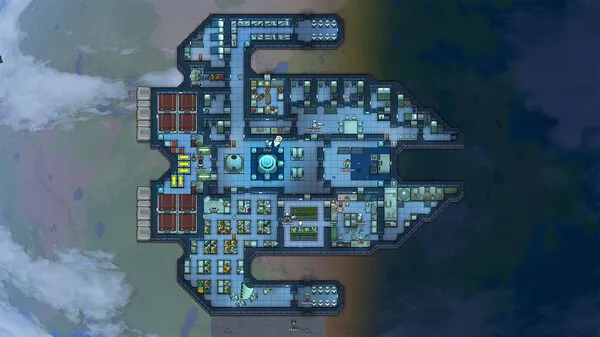
  • Planetary and Space Exploration – Adds gravships that let you build flying bases, travel between regions, explore debris fields, and even visit orbital stations.
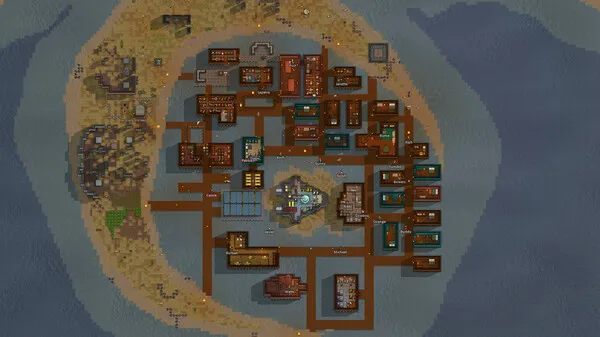
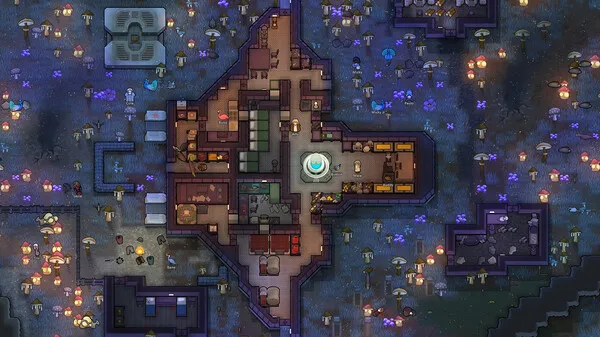
  • Diverse New Biomes – Introduces glowforests, scarlands, glacial plains, lava fields, underground crypts, and more, greatly expanding variety.
  • Expanded Wildlife – Over 40 new creatures, from therapy pandas and giant toads to bog hounds and mechanized beasts, each with unique behaviors.
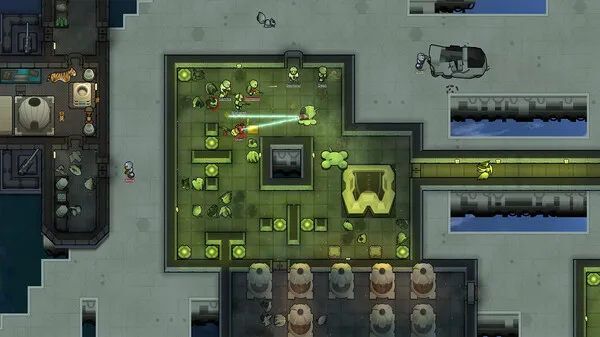
  • Quest-Driven Content – New missions include treasure hunts, mechanoid battles, orbital scavenging, and hive-mind threats, deepening storytelling.
  • Enhanced Travel and Settlements – Caravan systems are improved, and water-based colonies (fishing, bathing, aquatic living) become possible.
  • Boosts Replay Value – The new systems provide more long-term strategic depth and immersive decision-making.
  • Modding Potential – Adds core systems that modders can expand upon, ensuring strong community-driven content in the future.

CONS

  • Gravship Dependency – A large portion of exploration relies on the gravship, which may feel restrictive to players who prefer more traditional base-building.
  • Mixed Reception on Space Content – Some players feel orbital sections are less engaging compared to classic colony gameplay.
  • Less Impact for Modded Players – Many mods have already added similar mechanics, so Odyssey may feel less revolutionary for long-time mod users.
  • Potential Redundancy – Experienced RimWorld veterans might find some content overlapping with systems they’ve already mastered.

Get Game Links from Digital Markets

All trademarks belong to their respective owners.

Latest Post

How to Solve Multi-Layer Lock Levels in Match Factory: A Deep How-To Guide for Breaking Stacked Object Systems

How to Read a Multi-Layer Lock Level Before Touching Anything Multi-layer lock levels reveal their danger immediately, but only if you know how to look. The board usually appears dense, with many overlapping objects and very few obvious matches. What matters most is not what you see, but what is hidden underneath. Before making your first move, scan the board and identify how many object types are visible and how many are partially obscured. Locked layers usually follow repetition patterns, meaning that if you see two of the same object type on the surface, a third one is likely buried deeper. Recognizing this pattern early prevents you from filling the tray with unmatched items later. Understanding surface vs hidden logic Multi-layer levels rely on delayed information. Early visual warning signs Objects stacked three or more layers deep Very few visible triples Central objects acting as load-bearing blockers How to Set a Survival Objective Instead of a Clearing Objective In normal Match Factory levels, the goal is simple: clear objects as fast as possible. In multi-layer lock levels, this mindset guarantees failure. Your real objective is survival through control, not speed. Instead of thinking “How do I match this?”, think “What happens after I remove this?”. Every object you clear reveals information—and often danger. Progress only matters if it reduces future risk. Clearing objects that open too many layers too early almost always leads to tray overflow. Redefining progress Stability is progress in disguise. Control-based objectives Reduce object variety before clearing deeply Eliminate one object type completely when possible Avoid moves that reveal multiple layers at once How to Use the Tray as a Strategic Tool, Not Storage The tray is not a convenience feature—it is the core limiting mechanic of multi-layer lock levels. Every slot represents a decision that must pay off later. Early in the level, your priority should be to keep the tray flexible. This means avoiding single unmatched items and preserving empty slots. Once the tray fills with unrelated objects, you lose the ability to respond to surprise reveals. Tray economy mindset Every slot must earn its place. Tray discipline rules Keep at least two slots empty at all times Avoid holding unmatched single objects Do not “test” moves that add uncertainty How to Open Locked Layers Without Triggering Chain Failures Locked layers are designed to collapse control if opened incorrectly. Removing one object can reveal another that has no matching partners available, instantly increasing tray pressure. The correct approach is preparation before revelation. Before unlocking any layer, you must either have empty tray slots or already be holding matching partners. If neither condition is met, opening the layer is a mistake—even if the move looks tempting. Reveal preparation logic Never unlock without an exit. Safe layer-opening checklist At least two empty tray slots Known or predicted matching partners No simultaneous reveals from adjacent stacks How to Use Partial Matches as Structural Anchors Partial matches—holding two identical objects—are not mistakes in multi-layer levels. They are structural anchors that allow you to safely absorb future reveals. The key is selectivity. You should only create partial matches for object types that appear frequently and predictably. Holding rare or isolated objects creates dead weight that clogs the tray and limits future moves. Anchoring through predictability Certainty reduces risk. Partial match guidelines Use common object types only Never hold more than two partial pairs Release partials deliberately, not automatically How to Identify and Delay False Priority Objects Some objects are designed to look important but are actually traps. These false priority objects often sit in the center or appear visually isolated, inviting you to remove them early. In reality, they usually act as structural supports for multiple layers. Removing them too soon releases a flood of hidden objects, overwhelming the tray. The correct strategy is delay—leave these objects untouched until the board is under control. Understanding visual misdirection The obvious move is often wrong. False priority warning signs No visible duplicates nearby Positioned as a central connector Unlocks multiple layers when removed How to Time Matches Instead of Completing Them Immediately Completing a match feels productive, but in multi-layer lock levels, timing matters more than completion. A poorly timed match can free tray space only to refill it with new, unmanageable objects. Advanced play requires holding matches until they serve a structural purpose—such as eliminating an object type entirely or stabilizing the tray before a major reveal. Match timing discipline Delay creates control. When a match is actually safe It removes all remaining instances of an object It does not trigger layered reveals It creates space before a planned unlock How to Use Power-Ups as Structural Corrections Power-ups are often wasted as panic tools. In complex lock levels, they should be used as structural corrections, not emergency escapes. A single remove-item power-up can dismantle an entire problematic stack if used on the right object. Shuffle power-ups are especially dangerous and should only be used after fully understanding the board state. Strategic power-up mindset Fix the structure, not the symptom. Power-up best practices Remove-item to break chain blockers Shuffle only after full board analysis Never use power-ups impulsively How to Recover When the Tray Is Nearly Full A nearly full tray feels like a loss, but many situations are still recoverable. The key is mental reset. Panic clicking guarantees failure. Stop, reassess the board, and look for matches that do not introduce new object types. Even a single controlled match can restore stability if chosen carefully. Crisis recovery thinking Calm restores options. Recovery steps Pause and scan the entire board Identify lowest-risk match Sacrifice objects with known partners How to Build a Repeatable Method for Multi-Layer Lock Levels The final step is systemization. Multi-layer lock levels follow design templates. Once you recognize them, fear disappears. Your repeatable method should include early diagnosis, tray control, reveal preparation, match timing, and emotional discipline. When every level is approached with the same framework, difficulty becomes manageable. Process over instinct Systems outperform reactions. Multi-layer solving framework Diagnose before acting Control object variety aggressively Prepare before unlocking layers Time matches with intent

Latest Reviews

Welcome to bestgameh5.com, your compass for comprehenscoupled with the latest industry news. Our mission is to provide you with insightful analysis and valuable insights, enriching your digital journey.

© 2025 bestgameh5.com - All Rights Reserved