
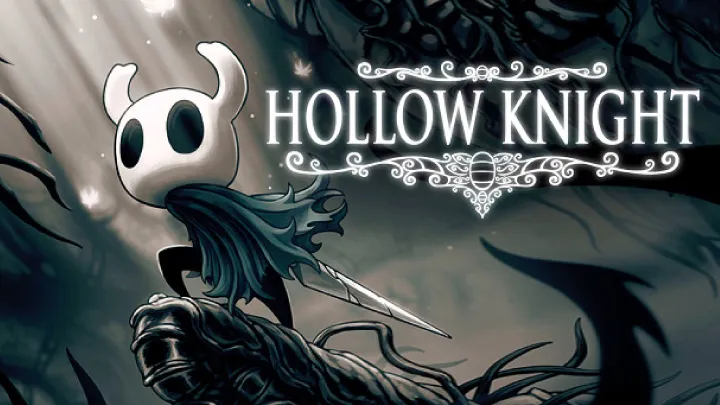
Hollow Knight, released in 2017 by the minuscule Australian team Team Cherry, is no longer just a beloved indie game; it is a foundational pillar of the modern Metroidvania genre. A tapestry of melancholy atmosphere, uncompromising difficulty, and intricately woven lore, the game has sold over 15 million copies and is widely regarded as one of the greatest video games ever made. Now, in late 2025, just months after the release of its monumental sequel, Hollow Knight: Silksong, the original game is experiencing a profound resurgence. New players, drawn in by the sequel's massive success and inclusion on services like Game Pass, are flocking to Hallownest, eager to understand the ancient ruin that birthed Hornet's new adventure. This article delves into the core components that define the original game—its philosophy, its enduring community, and the subtle narratives that continue to fuel a decade of discussion and competitive speedrunning.
 1. The Design Philosophy: Exploration and Unknowing
At the core of Hollow Knight's success is a design philosophy that champions player agency, rewarding careful exploration and maintaining a pervasive sense of mystery.
Cartography and the Reward of Discovery
Unlike many modern games that fill the screen with waypoints and objective markers, Hollow Knight forces the player—the silent protagonist, the Knight—to earn their understanding of the world. Initially, large areas are blank, requiring the player to locate the cartographer, Cornifer, and purchase a partial map before sitting on a bench to update it. This system instills a strong sense of accomplishment with every new pathway discovered and every corner charted. This non-linear exploration, prioritizing atmosphere over instant gratification, encourages players to internalize the labyrinthine structure of Hallownest, turning simple navigation into a puzzle.
Atmosphere and Environmental Storytelling
Team Cherry prioritized atmosphere, utilizing beautiful, hand-drawn art and Christopher Larkin’s haunting score to convey a sense of a grand civilization brought to ruin. Much of the lore is delivered through environmental storytelling—broken statues, forgotten journals, and the lingering presence of the Orange Infection. NPCs offer only cryptic clues, compelling players to piece together the tragic history of the Pale King, the Radiance, and the thousands of discarded Vessels sacrificed to halt the decay. The world itself speaks volumes, with areas like the City of Tears perpetually wet with the collective grief of its inhabitants.
2. The Sales Phenomenon and the Silksong Surge
The original Hollow Knight has proven to be a long-tail success story, with its most recent peak in popularity driven directly by the anticipation and eventual release of its sequel.
The 15 Million Mark and Critical Acclaim
Since its 2017 debut, the game has surpassed 15 million copies sold across all platforms. Critics universally praised its deep, responsive combat, evocative world-building, and high degree of challenge, quickly elevating it to "masterpiece" status. The release of major free content packs—The Grimm Troupe, Lifeblood, Hidden Dreams, and Godmaster—ensured the game remained relevant for years, constantly drawing in new players and providing veteran content.
The Post-Silksong Player Spike
The most recent surge occurred in August and September 2025. Leading up to Silksong's release, the original game hit a new all-time peak of nearly 40,000 concurrent players on Steam, with countless others preparing on consoles. Post-release, the original game saw a staggering 600% increase in its player base as newcomers sought to experience the world of Hallownest before fully diving into Hornet’s new adventure in Pharloom. This demonstrated the immense success of Silksong in revitalizing the original title for a new generation.
3. The Core Themes: Sacrifice, Decay, and Free Will
Beneath the platforming and combat, Hollow Knight explores profound and often dark philosophical themes that resonate deeply with its player base.
The Price of Preservation
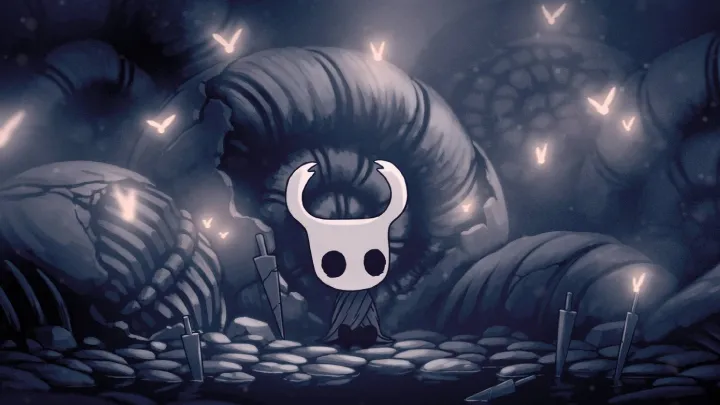
A central theme is Sacrifice, embodied by the Pale King and the Vessels. The King sought to preserve his kingdom, Hallownest, from the mental corruption of the Radiance by using the Void—a primordial, potent substance—to create "hollow" beings, or Vessels, devoid of Will, Mind, and Voice, to contain the Infection. The tragedy is that thousands of these children were discarded into the Abyss because they failed the test of "hollowness," demonstrating that the price of Hallownest's temporary salvation was the mass sacrifice of innocents.
The Conflict of Authority and Dreams
The game also explores the tension between Authority and Free Will. The Pale King granted his subjects sapience, but only to devote themselves to him, replacing the original worship of the Radiance, a being that represents dreams and aspirations. The Infection is, fundamentally, the Radiance’s attempt to reclaim her dominion through the dreams of the bugs, suggesting that unfulfilled dreams lead to delusion and decay. The Knight's ultimate choice in the various endings determines whether they perpetuate the cycle of sacrifice or break it entirely through the power of the Void Heart.
4. The Speedrunning Community: Precision and Optimization
The rigorous challenge, responsive controls, and complex sequence breaking possibilities of Hollow Knight have cultivated one of the most technical and competitive speedrunning communities in gaming.
Any% No Major Glitches (NMG)
The primary competitive category is Any% NMG, which aims to defeat the final boss in the fastest time without using major out-of-bounds exploits. In late 2025, the World Record (WR) for this category sits at approximately 30 minutes and 53 seconds. These runs require absolute mechanical perfection, including frame-perfect combat and mastery of advanced techniques.
Advanced Techniques and Routing
Speedrunners utilize an array of high-skill movement and combat techniques:
- Nail Cancelling: Stopping the dash animation with a quick nail attack to chain movement.
- Trans-Dash/Wall Boosts: Complex methods of gaining extra momentum or traversing boundaries using specific platform geometry.
- The "One-Hit" Routes: The current WR relies on a route optimized around the Fury of the Fallen charm (boosts melee damage at 1 HP), meaning major boss fights must be executed flawlessly and hitless to preserve the time-saving damage buff.
 5. The Enduring Challenge of the Godmaster Content
The Godmaster expansion, the final major free content update, continues to represent the ultimate barrier for completionists and casual players alike.
The Pantheon of Hallownest
The Godhome area, accessed via the content, introduced a boss rush mode structured into five increasingly difficult Pantheons. The final challenge, the Pantheon of Hallownest, forces players to defeat every single boss in the game, back-to-back, without the ability to fully heal between fights. This gauntlet remains the hardest piece of content in the game and is still considered a right of passage for dedicated fans.
The Absolute Radiance
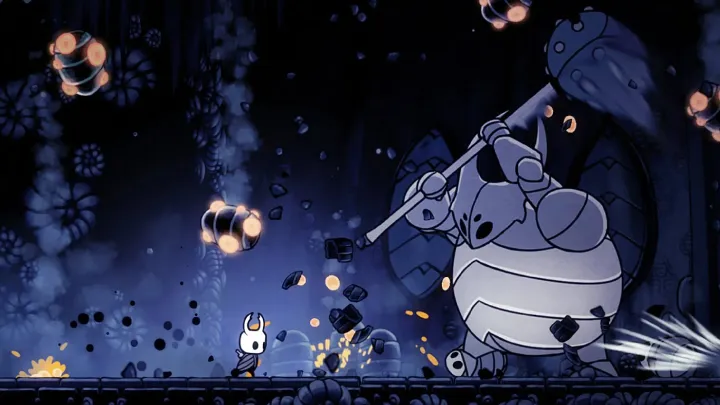
The final boss of the Pantheon of Hallownest, Absolute Radiance, is a heavily upgraded version of the game's secret true final boss. Its unforgiving patterns, massive health pool, and multi-stage fight sequence demand hundreds of hours of practice. Defeating the Absolute Radiance, particularly in the unforgiving Bind Modes (e.g., limiting charm usage), is a benchmark of skill.
6. The Charm System and Build Diversity
The Charm system provides the game’s primary customization layer, allowing players to create wildly different builds that radically alter the combat experience.
Over 40 Charms and Strategic Loadouts
With over 40 distinct Charms to discover and equip using a limited pool of notches, players can tailor the Knight to their preferred style. Builds can range from aggressive glass cannons (using Fragile Strength and Quick Slash) to defensive, passive spellcasters (using Shaman Stone and Soul Eater).
Synergy and Community Meta
The community is constantly optimizing "Charm Synergies"—combinations of Charms that stack or interact in powerful ways. The Vessel Builds, which focus entirely on maximizing Soul gain for spell spamming, and the Nail Builds, which prioritize physical attack speed and damage, remain the two core meta strategies, offering depth that few other Metroidvanias achieve.
7. Lore Discoveries and the Pre-Silksong Nexus
Even with Silksong's release providing new lore, the original game’s mysteries and connections to Hornet remain a constant source of community theory and analysis.
The Weavers and Hornet's Origin
Hollow Knight introduced the Weavers in Deepnest and the White Lady in the Queen's Gardens. The lore confirmed that Hornet is the child of the Pale King and the Deepnest Queen, Herrah the Beast, the latter of whom agreed to become a Dreamer (one of the seals on the Hollow Knight) in exchange for having a child. This detail firmly ties the sequel's protagonist to the tragic history of Hallownest and the Vessels, a bond the community is still scrutinizing against Silksong's new narrative.
8. The Modding Scene and Fan Expansions
The commitment of Team Cherry to their community has fostered a thriving modding scene, keeping the original game endlessly replayable.
Major Content Overhauls
Beyond simple visual tweaks, the Hollow Knight modding community has produced massive, community-driven content expansions. Projects like Hollow Knight: Randomizer provide a novel replay experience, scrambling the location of abilities and key items. Other overhauls introduce new characters, bosses, and even completely new areas, serving as "community sequels" that bridge the wait between official releases.
9. The Soundtrack: Christopher Larkin's Masterpiece
The emotional weight and unforgettable atmosphere of Hallownest are inseparable from the musical score composed by Christopher Larkin.
Melancholy and Grandeur
Larkin's score is often cited as a critical element of the game's success. Tracks like City of Tears (a melancholy, orchestral piece) and the high-energy, pulsing intensity of Mantis Lords perfectly underscore the game's dual nature: quiet sadness and explosive combat. The score adds a crucial layer of character depth, making the world feel ancient and emotionally resonant.
 10. The Original’s Continued Relevance
Despite the critical and commercial triumph of Silksong, the original Hollow Knight maintains a unique and essential place in the franchise.
The Dark Mirror
Hollow Knight stands as the dark mirror to Silksong's vertical, acrobatic vibrancy. It is the story of decay, sacrifice, and descending into a ruin, contrasting sharply with Hornet’s upward pilgrimage into the kingdom of Pharloom. For every player new to the series, the original remains the definitive entry point—the source of the lore, the benchmark for difficulty, and the emotional anchor for the entire saga. Its challenges and narrative questions will continue to be debated, explored, and speedrun for years to come.
Conclusion: The Seal of the Black Egg
Hollow Knight is a landmark achievement, a game that achieved mechanical perfection and narrative depth with a minimalist approach. Its sales continue to climb, its speedrunning records are constantly broken, and its lore remains a central topic of discussion, particularly in the shadow of the recently released Silksong. The kingdom of Hallownest, though infected and ruined, lives on as a timeless masterclass in world design, ensuring that the journey of the little Ghost will forever be one of gaming’s most profound descents.